Healthcare
5 Proven Fundraising Strategies of High-Performing Hospital Foundations
Here are a few pages from the operational playbooks of the highest performing hospital foundations in the field when it...
28mins read
.svg)
Blog
Curated wisdom for lasting donor connections 🤝
Follow us :

Healthcare
Here are a few pages from the operational playbooks of the highest performing hospital foundations in the field when it...
28mins read
Hospital foundation leaders are always searching for the most effective ways to improve healthcare fundraising results with limited staff, tighter oversight, and increasing pressure to demonstrate impact. Instead of reinventing the wheel, let’s borrow a few pages from the operational playbooks of the highest performing hospital foundations in the field.
The Association for Healthcare Philanthropy (AHP) defines a high-performing hospital foundation as being in the top 25% for net fundraising returns (revenue minus expenses) compared to peers in their specific category (such health systems, community hospitals, or academic medical centers), and which consistently deliver stronger net revenue, higher return on investment, and closer alignment with health system priorities. Notably, many of these leaders generate returns of $8 or more for every $1 invested.
Below are five proven hospital fundraising strategies used by these AHP leaders to structure their work, allocate resources, and manage relationships for consistent, long-term results.
High-performing hospital foundations work with executive leaders to embed philanthropy directly into the health system’s multi-year operating and capital plans, ultimately treating philanthropy goals with the same weight as clinical growth or operational objectives.
To sustain this strategic growth, high-performing hospital foundations use standardized metrics to advocate for resources and prove their value to the C-suite. The AHP Report on Giving provides annual healthcare fundraising data that allows hospital foundations to compare their performance against peer institutions on metrics like Cost to Raise a Dollar, Return on Investment, and Net Fundraising Revenue per FTE.
Beyond data, high performers focus on shifting fundraising for hospitals from a transactional activity into an ongoing, relationship-based, and transformational process. This “advisor-led” approach requires development professionals to act as trusted advisors who prioritize the donor's "True North"—their passions, values, and desired lasting impact—over organizational deadlines or immediate monetary concerns.
The most natural source for these major gifts is often within the hospital's own walls. Grateful patients account for approximately 88% of hospital donations and are the only donor group that consistently increases their giving over time, making them a cornerstone of effective fundraising for hospital foundations. High performers coordinate these programs through a partnership between development officers and physician champions.
While major gifts are vital, foundations must also feed the pipeline with structured mid-level programs. "Missing Middle" donors who give between $1,000 and $10,000 account for 30% of individual giving revenue. High-performing hospital foundations recognize that these loyal supporters are the future of the major gift pipeline for healthcare fundraising.
Designed specifically for hospital foundations that use Blackbaud Raiser’s Edge NXT® or Blackbaud CRM™, Almabase provides a HIPAA-compliant platform to manage events, engage grateful communities, and automate marketing—all while keeping your "source of truth" perfectly in sync.
Effortless Event Execution & Marketing Automation
Almabase’s event management tools are built to capture engagement signals, reduce post-event cleanup, and move qualified donors into the pipeline faster.
HIPAA-Compliant Data Integrity
Almabase supports HIPAA-aligned engagement workflows purpose-built for healthcare fundraising teams and integrates directly with Blackbaud systems.
A Secure "Grateful Community"
Almabase enables foundations to support grateful patient engagement without exposing teams to compliance risk or fragmented workflows.
Ready to see how your foundation can work smarter? Book a demo with the Almabase team today.

Fundraising
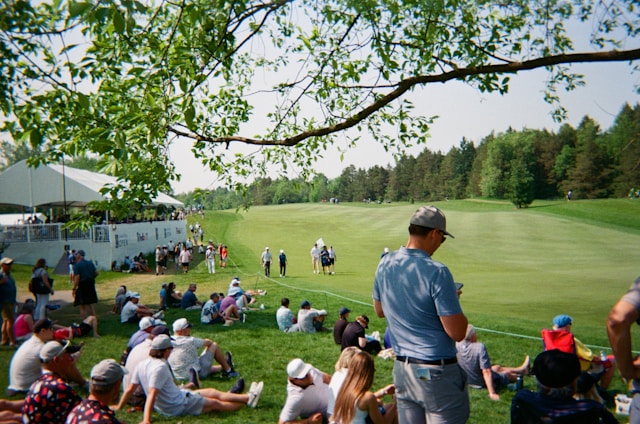
If you're planning a charity golf event, we've rounded up 17 fun, creative golf fundraiser ideas bring people together and help your cause raise more.
28mins read
In 2022 alone, charity golf events at U.S. courses raised an estimated $4.6 billion, with more than 141,000 events held and roughly 80% of all U.S. golf facilities hosting at least one. The average event raised about $29,500, but the ceiling is far higher: a well-structured tournament with the right sponsorship strategy can clear six figures in a single afternoon.
The best golf fundraising ideas however, look different depending on who you are. A K-12 booster club has different assets, different donors, and different cost structures than a hospital foundation courting major-gift prospects, and both look different from a community nonprofit trying to reach a new audience. Below are the ideas that actually work for each, with real examples of organizations putting them into practice.
Healthcare foundations occupy a different fundraising universe. Their donor base often skews into the wealthier and more philanthropic demographic, their cause has obvious emotional weight, and their boards often include physicians and executives who are themselves avid golfers. The events here tend to be larger, more polished, and more sponsorship-heavy.
The flagship model is an annual event hosted by the foundation at a premier course, often featuring physicians and executives as players.
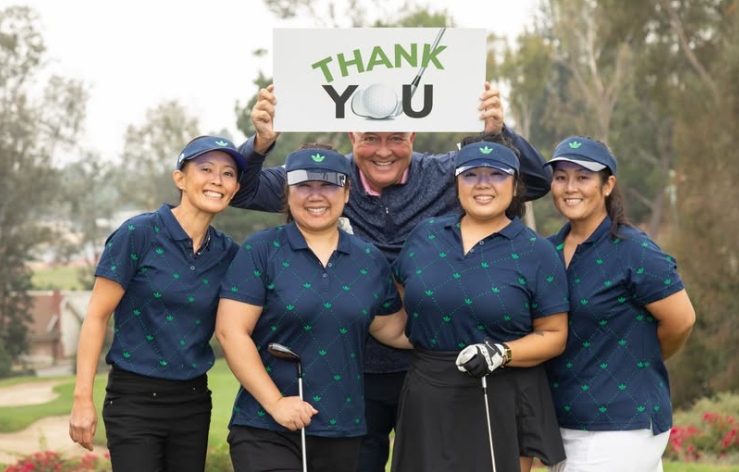
PIH Health Foundation's 2025 golf tournament raised $400,000 to support hospital priorities ranging from medical technology to caregiver support. The Edward Foundation, the fundraising arm of Edward Hospital in Illinois, raised more than $460,000 at its 30th Annual Charity Golf Tournament at Cog Hill Golf & Country Club, with more than 300 golfers contributing through sponsorships, donations, raffles, and games. Since its founding in 1990, that foundation has raised over $57 million for community healthcare initiatives, and the annual golf tournament is a meaningful piece of that total.
These events succeed because they bundle three things: a beautiful course experience, peer recognition (physicians playing alongside major donors), and a clear connection to a hospital service line the donor cares about.
Tying the tournament to a specific disease, program, or population sharpens the emotional pull.
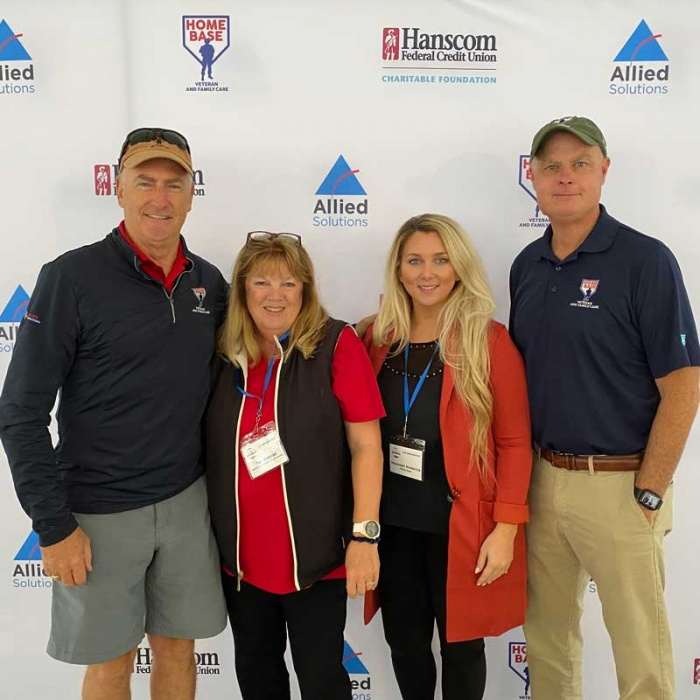
The Hanscom FCU Charitable Foundation's Alan M. Hart Memorial Charity Golf Classic raised $150,000 in a single year for Home Base, a Red Sox Foundation and Mass General Hospital program supporting veterans dealing with the invisible wounds of war. Over time, the tournament has contributed to more than $1.2 million in support for that program.
St. Jude Children's Research Hospital has been the beneficiary of the FedEx St. Jude Championship for more than 50 years, with the event helping raise over $60 million for pediatric cancer and life-threatening disease research.
If your foundation supports multiple service lines, picking one cause per tournament and rotating year by year keeps the storytelling sharp.
A first-ever tournament tied to a specific capital project creates urgency that recurring events lack.
The Seneca Healthcare Foundation in California hosted its inaugural charity golf tournament at Bailey Creek Golf Course and raised more than $85,000 while building awareness for the construction of the new Lake Almanor Community Hospital.
Th event drew over 100 golfers and featured creative touches including a MASH-themed drink station and live stand-up comedy from a group called the Hole Hecklers. Pairing the tournament with a tangible "we're building this" story gives donors something concrete to point to.
For events that already have momentum, layered add-ons are where the real money is. The Edward Foundation's tournament includes a Helicopter Ball Drop in which entrants pay for the chance to have a numbered golf ball dropped from a helicopter and land closest to the flag. Ball drops are particularly effective because they sell to people who aren't golfing, including hospital staff, board members, and community supporters who want to participate without playing 18 holes.
Offering a $10,000 cash prize, a luxury car, or a luxury trip for a hole-in-one creates outsized excitement at relatively low cost. Most foundations partner with a hole-in-one insurance provider to cover the prize, paying a small premium for enormous marketing buzz. Co-sponsoring the prize with a local car dealership turns the sponsorship into a billboard for the dealer at the event.
Schools and universities have one fundraising asset most other organizations would kill for: a built-in, lifelong community of alumni, parents, and boosters who already feel emotionally invested.
The single most reliable model in higher ed is a recurring, branded scholarship tournament that runs every year on the same calendar slot. Take the three below examples:
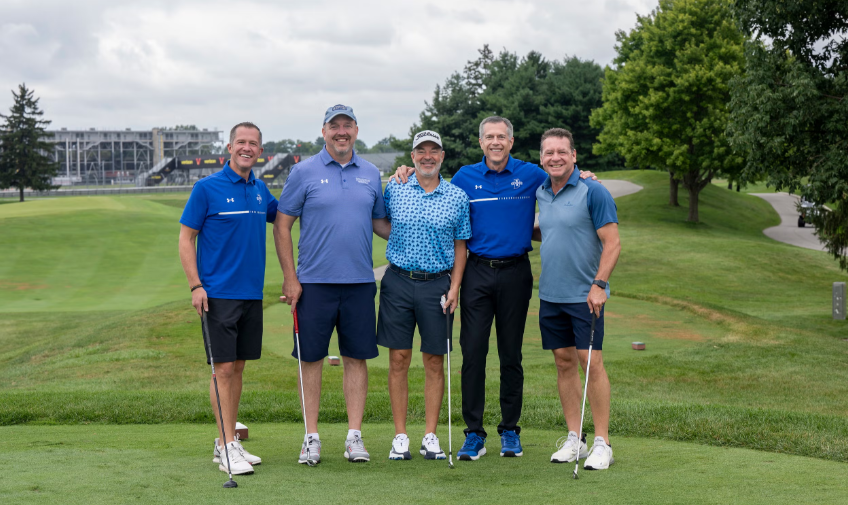
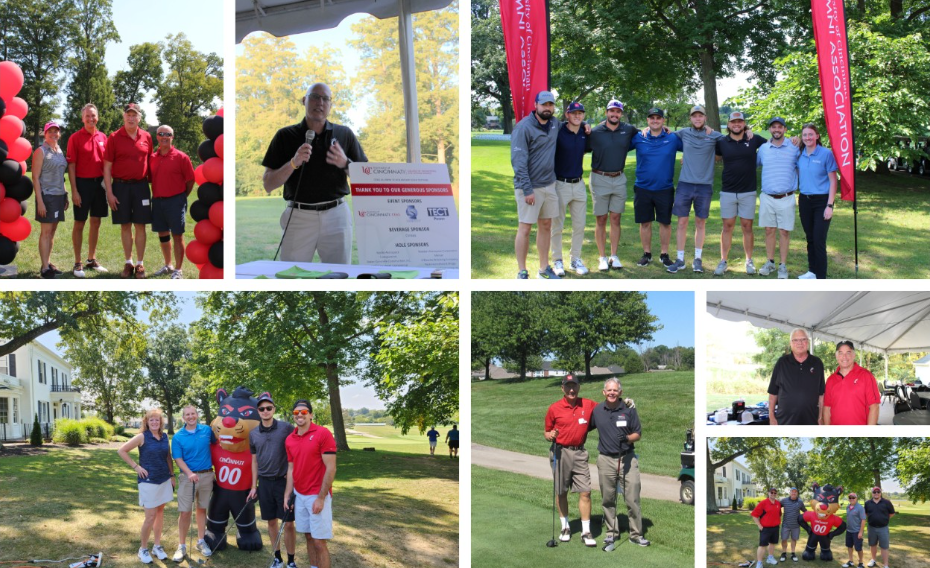
For institutions that have had a rich history of golfing alumni or golf fundraisers in the past, it should be a no brainer. However, the only way tradition gets built is if something gets it started in the first place. So maybe this can be the year where your institution starts to grow that tradition if it already hasn’t?
If your school has lost a beloved coach, professor, or alum, a memorial tournament builds extraordinary loyalty. Freed-Hardeman University's annual tournament honors the legacy of Dr. Cliff Bennett, a 1961 alumnus and former golf coach whose endowed scholarship still supports students. These events draw deeper giving because donors aren't just buying a foursome but also honoring someone who mattered to them.
It also provides a natural storytelling opportunity that builds a strong emotional connection for your next and future golf fundraisers within this frame.
For K-12 and college club teams that don't have a country club or alumni database, one thing you can consider is to sell labor and small experiences.
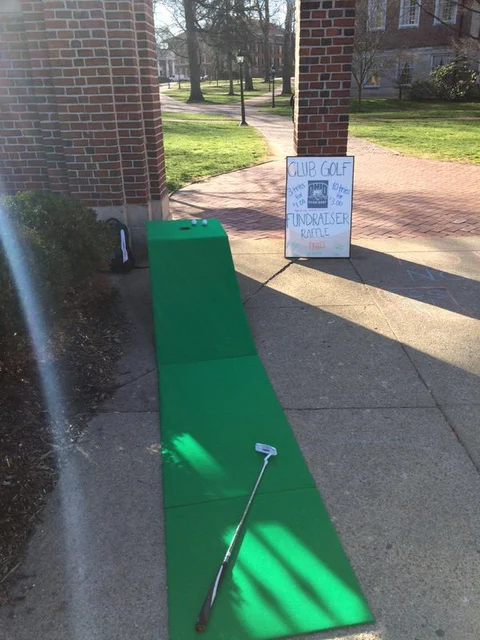
Ohio University's club team brought a putting green carpet to the busy College Green area and sold $1 putts to students for a chance to win a prize.
Similarly, The Citadel's club team works local tournaments in exchange for reduced greens fees and sells mulligans for $1 each on a single hole with the course's permission. These ideas also have the added benefit of almost zero overhead and turn a team into a visible part of campus life.
Smaller, themed tournaments hosted by fraternities, sororities, or specific academic departments can sometimes surprise you and outperform their size.
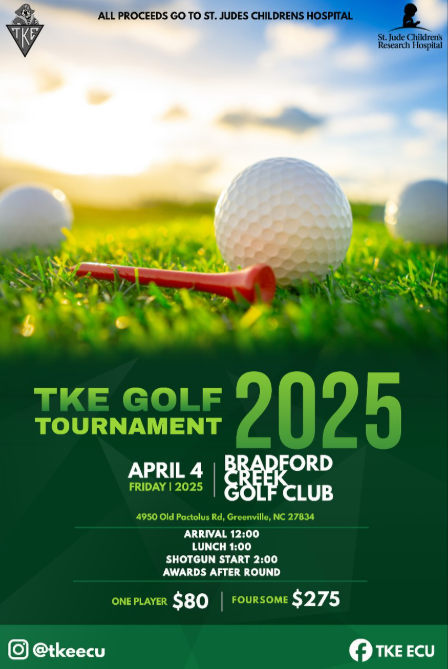
The Tau Kappa Epsilon chapter runs an annual golf tournament to raise funds for St. Jude Children’s Research Hospital. These events benefit from tight-knit communities where attendance feels almost obligatory in the best way.
For schools especially, hole sponsorships are the unsung hero of the budget. Local businesses pay $250 to $1,000 for a sign on a tee box, and parents who own those businesses are an easy first ask. Stacked correctly, sponsorship revenue can easily exceed registration revenue.
Community nonprofits typically have smaller donor lists and tighter budgets than hospital foundations, but they also have more flexibility to experiment. The best ideas in this category lean toward inclusivity (so non-golfers can participate), creativity (so the event is shareable on social media), and modern formats that don't require a 7am tee time at a country club.
The single biggest shift in nonprofit golf fundraising over the past five years has been the move to Topgolf and similar venues. Topgolf events are accessible to people who don't actually play golf, run in 2-3 hour windows instead of full days, and feel more like a party than a tournament.
Avery's Hope, an all-volunteer nonprofit supporting families of pediatric GI patients, hosts an annual Topgolf fundraiser specifically to be more inclusive for patient families and children.
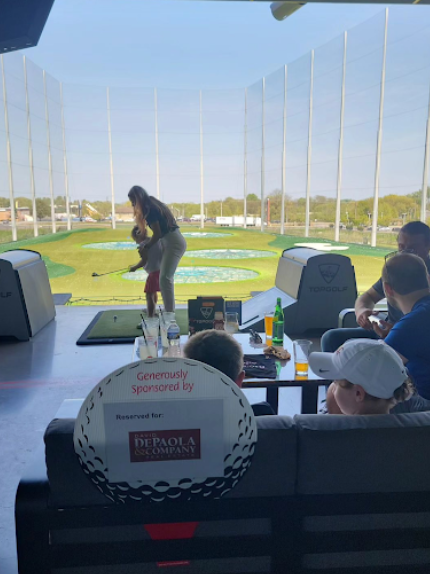
They drive revenue through bay sponsorships, a silent auction, and a raffle.
A glow golf night tournament uses glow-in-the-dark balls, LED-lit flags, and illuminated tee markers across nine holes after sunset.
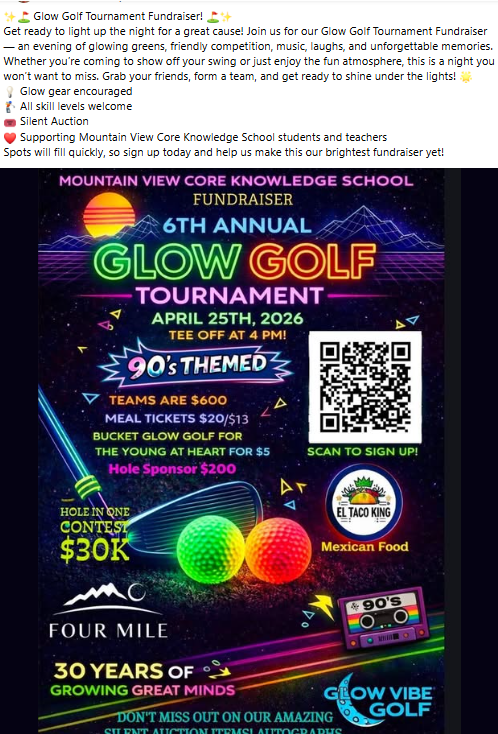
The format is highly photogenic, perfect for social media promotion, and stands out in a market where most prospects have already been invited to half a dozen "traditional" golf scrambles this year. The lower hole count also means a lower entry barrier for casual players.
If your donor base skews younger or has lots of families with kids, a charity mini-golf tournament is a high-yield option. The economics are excellent: course rental is cheap compared to a country club, kids can play, and the whole event runs in an afternoon. This format works especially well for nonprofits serving children, families, or schools.
A golf ball drop doesn't actually require a tournament. Sell numbered balls for $10 to $25 each, drop them from a helicopter or crane over a target, and award prizes to the closest balls. The model is brilliantly simple: supporters who can't golf, won't golf, or live nowhere near the course can still buy a ball and watch the drop on a livestream. Many nonprofits run a ball drop as a low-effort revenue add-on to an existing event.
Indoor golf simulator venues let nonprofits run "tournaments" in November, December, January, and February when outdoor courses are closed in most of the country. Players can compete on famous courses like Pebble Beach or St. Andrews without leaving the building. Because most other nonprofits cluster their fundraising in spring and fall, a winter simulator event lands in a less competitive calendar window for donor attention.
You don't need a full tournament to run a hole-in-one challenge. Some nonprofits set up a single par-3 hole at a community event, charity festival, or even a parking lot driving range and charge $10 to $20 per shot. The prize, again, can be insured for a small premium. It's a strong choice for organizations that want some "golf" energy without the operational complexity of running 18 holes.
For nonprofits already running events, putting contests are an easy revenue layer. Charge $5 per putt at a fundraising gala, festival, or community event with a prize for the longest putt sunk. Operationally simple, instantly fun, and works at almost any venue with 30 feet of flat ground.
Across all three categories, the events that outperform tend to share a few traits.
First, sponsorship is the engine, not the entry fee. A four-person foursome at $600 brings in $600. A title sponsor at $25,000 brings in $25,000. Build a real sponsorship deck with tiered benefits before you ever open registration.
Second, the second year is more important than the first. The most lucrative golf fundraisers in this article are 10th, 20th, and 30th annual events. Therefore, you should be looking to treat year one as the foundation of an institution.
Third, make it easy for non-golfers to participate. Ball drops, raffles, silent auctions, dinner-only tickets, and hole sponsorships all let people give without swinging a club. In most successful events, more than half the revenue comes from these layered components.
Fourth, partner with insurance providers for big prizes. The buzz from a $10,000 hole-in-one prize is wildly disproportionate to the actual insurance premium. Make sure it’s always a consideration.
Finally, pick the format that matches your community. A 70-year-old hospital foundation should not be doing glow golf at midnight, and a 28-year-old founder nonprofit should not be running a stuffy country club tournament for a donor base that mostly lives on Instagram. The best fundraising idea is the one that fits the people you're actually asking.
The greens are waiting. Pick the format that fits, plan for the long game, and you'll be writing your own "raised $400,000" press release soon enough.
Golf fundraisers will likely continue to be an important part of fundraising culture, especially in the US. With their added advantage of flexibility across institutions and nonprofit organizations, they also serve as one of the more flexible options (provided a golf course is geographically practical).
All that said, we hope we’ve given you plenty of ideas for your next (or first) golf fundraiser! And if you are looking for a platform to help you host your fundraiser, engage donors, and raise funds, book a personalized demo with us and we’d love to know how we can help!
Healthcare
Here are a few pages from the operational playbooks of the highest performing hospital foundations in the field when it...
28mins read
Hospital foundation leaders are always searching for the most effective ways to improve healthcare fundraising results with limited staff, tighter oversight, and increasing pressure to demonstrate impact. Instead of reinventing the wheel, let’s borrow a few pages from the operational playbooks of the highest performing hospital foundations in the field.
The Association for Healthcare Philanthropy (AHP) defines a high-performing hospital foundation as being in the top 25% for net fundraising returns (revenue minus expenses) compared to peers in their specific category (such health systems, community hospitals, or academic medical centers), and which consistently deliver stronger net revenue, higher return on investment, and closer alignment with health system priorities. Notably, many of these leaders generate returns of $8 or more for every $1 invested.
Below are five proven hospital fundraising strategies used by these AHP leaders to structure their work, allocate resources, and manage relationships for consistent, long-term results.
High-performing hospital foundations work with executive leaders to embed philanthropy directly into the health system’s multi-year operating and capital plans, ultimately treating philanthropy goals with the same weight as clinical growth or operational objectives.
To sustain this strategic growth, high-performing hospital foundations use standardized metrics to advocate for resources and prove their value to the C-suite. The AHP Report on Giving provides annual healthcare fundraising data that allows hospital foundations to compare their performance against peer institutions on metrics like Cost to Raise a Dollar, Return on Investment, and Net Fundraising Revenue per FTE.
Beyond data, high performers focus on shifting fundraising for hospitals from a transactional activity into an ongoing, relationship-based, and transformational process. This “advisor-led” approach requires development professionals to act as trusted advisors who prioritize the donor's "True North"—their passions, values, and desired lasting impact—over organizational deadlines or immediate monetary concerns.
The most natural source for these major gifts is often within the hospital's own walls. Grateful patients account for approximately 88% of hospital donations and are the only donor group that consistently increases their giving over time, making them a cornerstone of effective fundraising for hospital foundations. High performers coordinate these programs through a partnership between development officers and physician champions.
While major gifts are vital, foundations must also feed the pipeline with structured mid-level programs. "Missing Middle" donors who give between $1,000 and $10,000 account for 30% of individual giving revenue. High-performing hospital foundations recognize that these loyal supporters are the future of the major gift pipeline for healthcare fundraising.
Designed specifically for hospital foundations that use Blackbaud Raiser’s Edge NXT® or Blackbaud CRM™, Almabase provides a HIPAA-compliant platform to manage events, engage grateful communities, and automate marketing—all while keeping your "source of truth" perfectly in sync.
Effortless Event Execution & Marketing Automation
Almabase’s event management tools are built to capture engagement signals, reduce post-event cleanup, and move qualified donors into the pipeline faster.
HIPAA-Compliant Data Integrity
Almabase supports HIPAA-aligned engagement workflows purpose-built for healthcare fundraising teams and integrates directly with Blackbaud systems.
A Secure "Grateful Community"
Almabase enables foundations to support grateful patient engagement without exposing teams to compliance risk or fragmented workflows.
Ready to see how your foundation can work smarter? Book a demo with the Almabase team today.
Healthcare
We're bringing you some vital hospital fundraising event benchmarks for hospital foundation teams to assess event...
28mins read
Hospital foundations pour immense resources into signature galas, golf tournaments, and auctions, but without concrete data, how do you measure actual success?
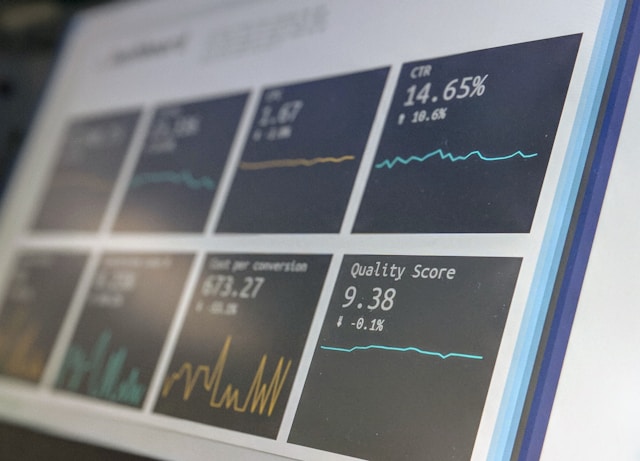
These 2026 hospital fundraising event benchmarks show hospital foundation teams how to assess event performance, improve donor experience, and convert fundraising event attendees into long-term supporters.
To help healthcare teams bridge this gap, Almabase’s event management platform for healthcare foundations uses TrueSync integration to sync clean, real-time data directly into Raiser’s Edge NXT, enabling you to evaluate your hospital fundraising event metrics with significantly less manual effort.
The Benchmark: 75% of in-person fundraising events and 76% of hybrid fundraising events met or exceeded budget goals.
Why this matters: Face-to-face connection remains a reliable baseline for high-stakes fundraising, providing the space for grateful patient storytelling and high-touch donor cultivation.
How to use it:
The Benchmark: 77% of virtual-only events met or exceeded goals—a massive jump from 59% the previous year.
Why this matters: There’s a common misconception that virtual events were a "pandemic-only" trend, but the data tells a different story.
How to use it:
The Benchmark: 83% of nonprofits said their in-person auction events meet or exceed their fundraising goals.
Why this matters: Auctions are the highest-rated revenue drivers, signaling strong sector-wide confidence in their donor appeal.
How to use it:
The Benchmark: The average net worth of golf tournament attendees is $768,000.
Why this matters: Golf tournaments attract high-value corporate sponsors and offer predictable revenue potential and strong donor engagement.
How to use it:
The Benchmark: 39% of nonprofits plan on investing in more modern technology and automation in 2026.
Why this matters: Event technology platforms like Almabase’s reduce friction during high-emotion donor moments. Any technical barrier at check-in or bidding can break momentum and cost real revenue.
How to use it:
The Benchmark: 41% of Gen X donors attend in-person fundraising events.
Why this matters: Gen X is entering their highest-earning years. Ignoring this segment weakens your future donor pipeline.
How to use it:
The Benchmark: 50% of Baby Boomer donors don’t like attending fundraising events.
Why this matters: Boomers are major donors, but half actively dislike large events. Relying on broad invitations can weaken donor trust.
How to use it:
The Benchmark: Mid-level “Engagement Seeker” donors have a strong appetite for in-person involvement.
Why this matters: These donors are the most likely to respond to deeper cultivation and upgraded giving.
How to use it:
The Benchmark: 67% of donors who were asked to give again after attending a recognition event did so, and they attributed their willingness partly to the event.
Why this matters: Recognition events are not just stewardship; they are strategic revenue drivers that reinforce trust.
How to use it:
The Benchmark: Only 23% of first-time donors return for a second gift.
Why this matters: Event attendees often give impulsively and drift away without a structured touchpoint.
How to use it:
The Benchmark: Healthcare nonprofits retain just 14% of new donors—the lowest in the nonprofit sector.
Why this matters: Low retention erodes event ROI. When 7 out of 10 new attendees don’t turn into repeat donors, your hospital foundation is forced into a permanent, expensive cycle of donor acquisition rather than building on previous successes.
How to use it:
Evaluating your hospital fundraising event benchmarks is only possible with a clean data stream. Almabase simplifies performance management by:
Ready to turn your hospital foundation’s fundraising event data into a strategic advantage for 2026? [Request a Demo]
Healthcare
Sponsorships are vital to bringing any hospital event into reality. Learn how you can attract more of the right sponsors for...
28mins read
Hospital foundations raised an average of $7.7 million in net fundraising revenue in 2024. Galas and other fundraising events played a pivotal role, with some hospital foundations raising millions at just one gala alone.
Sponsorships are the key to any event’s success, providing up to half of a gala’s operational expenses. But securing these partnerships requires more than sending mass emails and generic proposals to businesses in your region. You need an intentional strategy, thoughtful outreach, and a clear understanding of why businesses sponsor events in the first place.
This post breaks down the most effective ways to attract high-value gala sponsorships, and how Almabase’s event and data automation tools streamline sponsor management and eliminate manual work.
Start with companies whose business goals align with your audience. Prioritize those that sponsor other community events, such as parades, golf tournaments, galas, health fairs, summer concerts, and walks or races.
Tap board members, physicians, executives, and volunteers for warm leads. Warm intros convert much better than cold asks.
Companies more likely to say yes include:
Also, reach out to businesses that have supported your foundation in the past, and ask them to increase their support.
Identify the right leaders in marketing, brand, or business development and ask board members or executives for warm introductions whenever possible.
Reference their recent community involvement or past sponsorships to show how their values align with your mission, and provide a brief overview of your foundation and event audience.
Close with a simple next step: a short conversation to review sponsorship levels for gala participation and the options that best match their goals. Have a hospital executive co-sign the email to elevate your outreach.
Hi {{First Name}},
I am writing on behalf of [Foundation Name], which raises money to support the life-saving mission of [Hospital Name]. We have so much respect for [Name of Company]’s longtime support of local community initiatives, including your recent sponsorship of [INSERT INFO HERE].
Your values align perfectly with our mission to provide compassionate healthcare to families throughout our region. That’s why I’m reaching out to ask if you’d join us as a corporate sponsor for our [NAME & DATE OF EVENT].
This popular fundraising event attracts [NUMBER] residents and business leaders to support innovative healthcare in our community. Our goal is to raise [DOLLAR AMOUNT] to fund [PROJECT].
Your sponsorship would provide high-visibility and recognition before and during the event, including potential mention in local media advertisements during [NUMBER] weeks/months of promotion.
Can we schedule a brief 15-minute call to discuss the possibilities?
Thank you for considering this opportunity to make a difference in our community.
Sincerely,
NAME
ORGANIZATION
Share concrete business benefits, such as logo placement, signage, digital exposure, program ads, and opportunities to engage directly with attendees. Provide brief details that help companies justify the spend and understand your sponsorship levels for gala packages:
This elevates your CTA beyond ‘support our mission’ toward the tangible marketing value they’ll receive as gala sponsors, which is essential in any corporate event sponsorship decision.
Thank each sponsor during the event, in follow-up donor communications, on your website, and across your social media channels.
Send a personalized thank-you note within a few days after the event. Reference their specific contribution and show their impact with a short story, quote, or examples of the specific programs or people they supported.
Send a report within a week that includes total attendance, audience demographics, and every place their logo appeared, along with photos of signage and digital placements.
Add key performance numbers, such as social reach, email impressions, website traffic, on-site engagement highlights, and any notable feedback. If recognition moments or fundraising results were part of the event, summarize them.
Almabase brings all your healthcare fundraising events into one connected platform that syncs directly with Raiser’s Edge NXT, reducing manual work and keeping every team aligned.
Centralize event metrics, attendee engagement, and sponsor activity so fundraising, marketing, and gift officers can collaborate more efficiently and act on complete data.
Use branded event pages, automated reminders, and targeted email workflows to promote events without juggling multiple tools or teams.
Sync attendance, engagement, giving data, and activity into Raiser’s Edge NXT. Provide complete, accurate ROI without manual entry.
Set reminders, deliverable deadlines, staff updates, thank-you messages, and post-event recaps automatically. Consistent communication creates a polished sponsor experience.
Healthcare
We're bringing you five fantastic hospital fundraising ideas to help you visualize your next event or campaign and kickstart...
28mins read
Rising competition for donor attention, the need for diversified revenue streams, and the growing shift toward community-anchored fundraising are changing how hospital foundations engage supporters.
Today's donors, especially younger donors, prefer experiential giving: personal, Meaningful experiences they can feel and remember. In fact, 75% of Millennials and two-thirds of Gen X say they’re more likely to donate after a fantastic event experience.
These trends are reshaping donor engagement and nonprofit fundraising, especially as hospital foundations look for fresh healthcare fundraising ideas that spark connection and long-term loyalty.
Small fundraising events offer alternatives to traditional hospital gala ideas for hospitals and are quickly becoming a reliable way to engage donors and inspire repeat giving — an urgent problem since fewer than 20% of first-time healthcare donors ever return.
Almabase helps make your event planning, and donor follow-up easy, automated, and intuitive, with automated ticketing, branded event pages, QR check-ins, and TrueSync which ensures data that flows directly into Raiser's Edge NXT. What once took days or weeks of manual cleanup now takes minutes, freeing your team to focus on donor relationships instead of administrative tasks.
Let's look at five fun ideas that can turn your fundraising event into the talk of the town, and how Almabase’s technology makes them easier, faster, and more cost-effective to execute.
These invitation-only events, typically hosted in private homes or unique venues, create the kind of meaningful access that donors never get from a ballroom full of 300 people.
CommonSpirit's Dignity Health Foundation--Inland Empire turned its board-hosted salons into high-impact donor cultivation tools. They’ve hosted salons in unforgettable locations: a board member's airplane hangar dressed up for the holidays, an animatronics studio, and even a physician's exceptionally gorgeous home.
The results speak for themselves. CommonSpirit’s salons have attracted three major gifts, a new bequest, new relationships with donors showing major giving potential, and deeper board engagement. The team is already planning multiple new salons for FY26.
Raffles remain a staple across nonprofit fundraising, and in healthcare they offer an easy entry point for supporters who may not attend a gala. They’re relatively simple and inexpensive to execute, and can be incredibly effective when you add a little urgency or exclusivity.
Manitoba-based Boundary Trails Health Center Foundation raised more than $36,000 (after paying out the raffle winner) in its winter 2025 raffle. Attractive ticket bundles kept momentum rolling—from 10 tickets for $20 up to 200 tickets for $100.
Virginia’s Martha Jefferson Hospital Foundation capped tickets at 200, sold each for $100, and offered a top prize of up to $10,000. With odds of just 1 in 200, its raffle turned into something exclusive and talked about.
High tea fundraising events reach supporters who prefer something small and elegant and are a great way to attract community leaders, long-time volunteers, and donors of all ages who appreciate tradition, hospitality, and a clear sense of purpose.
Peace Arch Hospital Foundation hosts its "Steeped in Elegance" event at a private ocean-side estate, combining a refined luncheon, themed attire, and a tightly curated guest list. The British Columbia-based healthcare foundation tied every detail back to a clear need: renovating the hospital's production kitchen to improve the quality and dignity of patient meals.
Tastings offer a relaxed atmosphere where people can socialize while staying connected to your mission. These fundraising events attract a wide mix of healthcare supporters—donors, business leaders, board members, and younger professionals who respond well to casual, social formats.
Ohio-based Magruder Hospital Foundation hosts its Grapes & Grains fundraising event at a local brewery, offering curated beer and wine tastings, guided brewery tours, food pairings, and an online auction that opened two weeks before the event. Proceeds helped the hospital foundation fund a new operating table designed specifically for hip surgeries—a direct, tangible story that donors could rally around.
Round-up campaigns literally meet people where they are—at the checkout counter—and keep your hospital's mission visible in daily life.
Washington-based Tri-State Hospital Foundation runs its Annual Retail Round Up every May. Local businesses encourage customers to round up or make small add-on donations at checkout. Participating retailers include local hardware stores, pharmacies, and fast-food locations.
Let Almabase Automate Your Next Hospital Fundraising Event
Creative events don’t have to create more work. Here are just some of the ways Almabase makes your events turnkey and intuitive with automation and TrueSync functionality with Raser’s Edge NXT:
Instead of spending days cleaning data or chasing down payments, your team can spend more time building relationships, deepening donor engagement, and turning your memorable events into lasting support.
See how Almabase helps hospital foundations automate event logistics, strengthen donor relationships, and free up staff time for the work that actually moves your mission forward.

Healthcare
Learn how your hospital foundation can turn event attendees into donors and loyal supporters through well-planned
28mins read
Every hospital fundraising event is an opportunity to turn attendees into donors. When your post-event stewardship is fast, personal, and data-driven, you’re more likely to turn one-time guests into loyal supporters.
The difference between a successful gala and a transformational one lies in your ability to turn the energy and passion of the live event into meaningful, ongoing donor support, using the right healthcare fundraising strategy and technology to make it happen efficiently and securely.
Almabase simplifies hospital foundation donor cultivation with automation tools that make every follow-up faster and more personal.
Our event management platform automatically syncs attendee data directly to Raiser’s Edge NXT, allowing you to personalize communication at scale. Built-in email, text, and video tools let your team send targeted thank-yous, impact updates, and future invitations without manual data entry or list sorting.
See how Almabase helps hospital foundations automate event follow-up for fundraising and strengthen donor relationships after every event.
For more than a decade, Almabase has helped hundreds of nonprofit organizations plan successful events and turn them into long-term donor relationships.

These are five of the most effective steps we’ve identified to turn event attendees into loyal donors.
Almabase’s Raiser's Edge integration for hospital foundations ensures all data flows accurately and securely.
Registration details, ticket purchases, donations, and check-ins flow directly into donor profiles—no spreadsheets required. And automatic tagging of attendees by type (sponsor, bidder, volunteer, or first-time guest), makes it easy to segment your list and send more personalized follow-up communications.
Send a thank-you email to all attendees the same day as the event. Call or send handwritten notes to top supporters within two days.
Personalized, automated donor follow-up ensures your hospital foundation stays top-of-mind after every event. Almabase’s AI Email Builder makes it easy to personalize messages by participation type, such as table sponsor, auction bidder, or volunteer, and cuts creation time from 20 minutes to less than one.
1 Week Later: Segment by engagement level and tailor your donor outreach accordingly.
By tracking attendee behavior in real time (donated $0 vs. $100+, purchased add-ons, checked in), Almabase automatically triggers personalized, behavior-based outreach.
Our multi-channel automation keeps your message consistent across email, SMS, and print. Outreach remains timely, relevant, and aligned to each supporter’s engagement level.
2 Weeks Post-Event: Send a concise “Event Impact” email that demonstrates what their participation accomplished. Share event photos, total funds raised, and a powerful patient story to highlight impact: “Your support helped raise $250,000 to expand the neonatal ICU.”
Use storytelling to build emotional connections and trust—two essentials in healthcare fundraising success.
Add a next-step call-to-action. For example:
Almabase’s partnership with Storyraise simplifies this kind of impactful outreach. By enabling digital donor reports with visuals and video, we help hospital foundations create interactive updates that show donors their impact and deepen donor engagement over time.
4 Weeks Post-Event: Send a short survey to capture feedback and insights you can use to personalize future outreach. Then, transition attendees into your ongoing donor communications so they continue receiving impact stories and invitations year-round
Almabase automates this process through our healthcare donor management software, built to link event and donor data in real time. With TrueSync for Raiser’s Edge NXT, every interaction—whether a gift, registration, or memorial campaign—is instantly reflected across systems, eliminating manual updates and ensuring staff always have a current view of each supporter’s activity.
Using Almabase’s Grateful Community Engagement tools, families and patients can easily create memorial or gratitude campaigns to honor loved ones, invite others to give, and keep supporters emotionally connected to your mission throughout the year
These HIPAA-secure features empower healthcare foundations to strengthen long-term relationships, unify event and donor data, and build a sustainable culture of gratitude across every touchpoint.
Hospital foundations need secure, compliant technology that simplifies post-event stewardship. Almabase is fully HIPAA-ready and SOC 2 Type II certified. Almabase’s Raiser’s Edge integration helps hospital foundations maintain real-time data accuracy and compliance.
By connecting every registration, check-in, and gift directly to Raiser’s Edge NXT, Almabase helps hospital foundations convert fundraising event attendees into donors, ensuring every event fuels long-term engagement and sustainable growth through automated donor follow-up and smart segmentation.

Healthcare
Stop losing hours to manual event work! Discover the Five Hidden Costs of manual gala operations, including HIPAA...
28mins read
Your fundraising team just spent 40 hours planning a successful gala that raised $250,000. Now they'll spend another 40 hours manually entering guest lists into spreadsheets, reconciling payments across multiple systems, and sending individual thank-you emails.
This is the hidden cost of manual event workflows. While manual processes might seem like a cost-saving measure, they drain staff time, increase error rates, create HIPAA compliance risks, and pull your team away from what matters most: building donor relationships.
Hospital fundraising teams lose nearly five hours every day to these repetitive tasks. Almabase's fundraising event management software eliminates manual data entry, keeps Raiser's Edge NXT data in sync, and can save hundreds of staff hours each year.
Hospital fundraising teams rely on galas and events to fund critical programs, but manual processes drain staff time, increase the risk of errors, and make it harder to measure results accurately.
Here are just five ways your hospital foundation loses opportunities, revenue, and time by relying on outdated manual processes to manage your galas, golf tournaments and other fundraising events.
Manual workflows force staff to re-enter information across multiple systems — CRMs, payment systems, spreadsheets, and more. One analysis found that nonprofit staff spend up to 50 percent of their time on manual data entry. This kind of work is boring, wasteful and can lead to burnout.
Almabase’s TrueSync™ integration with Blackbaud Raiser’s Edge NXT and Blackbaud CRM reduces manual handling of sensitive records while maintaining clean, consistent data across systems.
A gala can generate thousands of data points, from attendee names and guest additions to dietary preferences and sponsorship tiers. That leaves too much room for error, since there are errors in about one percent of manual data entry keystrokes.
The result is delayed or missed donations and inconsistent communications—a major turnoff for donors. These mistakes often ripple downstream, leading to inaccurate reports and missed follow-ups that weaken donor trust.
Every hour spent on repetitive administrative work, like re-entering event registrations or sending one-off acknowledgments, detracts from opportunities to build meaningful donor relationships, plan strategic campaigns, and focus on high-impact activities that drive ROI for your organization.
Nearly 75% of nonprofits report persistent job vacancies tied to heavy workloads and manual processes. But one study found that turnover drops significantly when organizations shift away from the soul-sucking “busy work” of manual processes.
Many third-party vendors aren’t HIPAA-compliant or won’t sign BAAs—making them risky for fundraising for healthcare. Almabase’s HIPAA-compliant event registration platform is designed specifically for healthcare foundations, maintaining data security and compliance while integrating seamlessly with Raiser’s Edge NXT.
Trying to manage event registration, ticketing, and communications manually creates major inefficiencies.
Almabase’s event management software gives hospital foundations a single, HIPAA-compliant event registration software solution to handle every step from setup to stewardship.
For teams used to navigating disconnected tools, the results are immediate: faster event setup, fewer errors, and greater visibility into event ROI. Dashboards track participation, sponsorships, and giving in real time, helping staff quickly identify top prospects and follow up while engagement is fresh.
Key Benefits:
Almabase’s ticketing software for healthcare simplifies operations and keeps all event data connected to Raiser’s Edge, allowing fundraisers to spend more time on what matters—strengthening relationships and driving impact in healthcare fundraising.
Hospital foundations juggling multiple systems from spreadsheets to payment platforms and CRMs often leave staff buried in administrative work instead of engaging donors. Almabase eliminates that burden by creating a single, accurate source of truth so teams no longer need to chase down lists or reconcile records after every gala.
By automating event ticketing and maintaining HIPAA secure event registration, Almabase helps foundations run compliant, efficient, and mission-focused events that fuel sustainable fundraising for hospitals.
See how Almabase's fundraising event management software helps hospital foundations save hours, ensure compliance, and raise more funds.